How Does Debt Settlement Work? A Step-by-Step Guide for 2026
Published August 30, 2026 · By LightPath's IAPDA-certified specialists
Most people first hear the phrase “debt settlement” somewhere in the middle of a hard month — a card that got closed, a collection letter, a minimum payment that suddenly isn’t so minimum. And what they usually find online is either a sales pitch or a warning label. Not much in between.
This guide is the in-between. Here is how the process actually works, step by step, what the federal rules require of any legitimate company, and where the real risks sit. No pitch, no scare tactics — just the mechanics.
First, what debt settlement actually is
Debt settlement is the process of negotiating with a creditor or collection agency to accept less than the full balance to consider an account resolved. It is a negotiation, not a legal erasure of debt, and it applies only to unsecured debt — debt with no collateral behind it.
That distinction matters, so here it is concretely.
Debt that can typically be settled
- Credit cards and store cards
- Medical bills
- Accounts already in collections
- Private student loans
- Unsecured personal loans
- Payday loans
- Some business debt
- Deficiency balances after a vehicle repossession
Debt that generally cannot be settled
- Mortgages and home equity loans
- Auto loans on a car you still have
- Federal student loans
- Federal, state, or local taxes
- Child support and most court-ordered obligations
The line is collateral and government backing. If a lender can take something back, or if the government is the creditor, settlement is not the tool.
Why creditors settle at all
This is the part that surprises people. Why would a bank ever agree to accept less than what it’s owed?
Because the alternative is often worse for them. Once an account is seriously past due, the creditor is looking at a balance they may never collect. They can keep spending money chasing it, sell it to a debt buyer for pennies, or take a negotiated payment now and close the file. Creditors run this math constantly — it is a normal part of how large lenders manage delinquent portfolios.
None of which means every account settles, or that any particular outcome is promised. Creditor policies vary, and some creditors are far more willing to negotiate than others. Any company that tells you otherwise before reviewing your specific accounts is telling you what you want to hear.
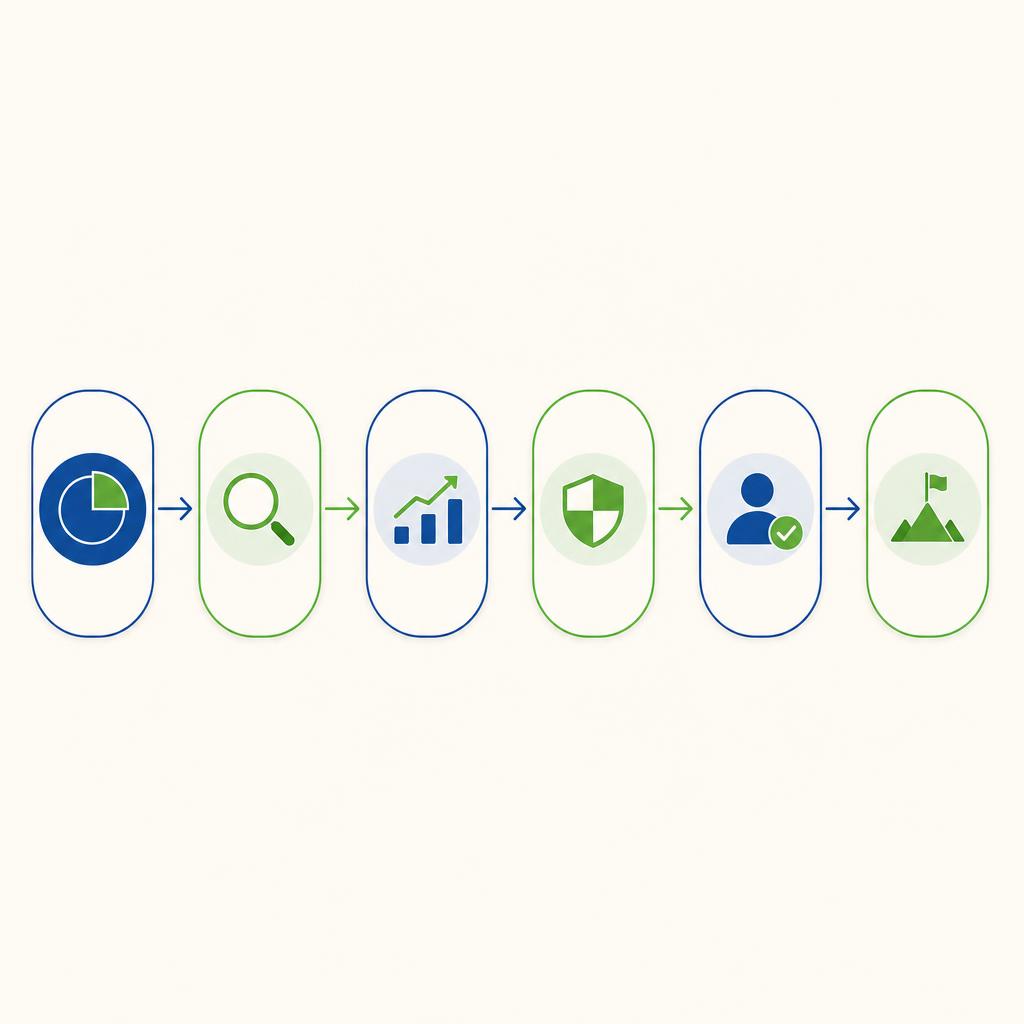
The process, step by step
Step 1: The consultation and the honest math
A legitimate program starts with a conversation, not a contract. A certified representative reviews your total unsecured debt, who your creditors are, how far behind you are (or aren’t), your income, and what you can realistically set aside each month.
Two things should come out of that call. First, whether you qualify at all — most programs need roughly $10,000 or more in unsecured debt to make sense, and the math generally works best above $30,000. Second, whether settlement is even the right tool for you. Sometimes it isn’t, and you deserve to hear that from the person on the phone rather than discovering it eighteen months in.
Programs are also not available in every state, because state licensing and regulation differ. That should be confirmed for your state on the very first call.
Step 2: The program design
If it fits, you get a written program: which accounts are enrolled, an estimated program length, the monthly amount you’d set aside, and the fee structure — including how the fee is calculated and what it works out to in dollars for your specific accounts.
Federal law requires this disclosure up front. Before you enroll, a debt relief provider must clearly tell you all fees and the terms attached to them, how long the program is estimated to take and by when it will make a bona fide settlement offer to each creditor, how much money must accumulate before an offer is made, the consequences if you stop paying creditors, and your rights over your own money in the dedicated account.
If a company glosses over any of these, that is not a style difference — and it is a fair reason to walk.
Step 3: The dedicated account
You open a dedicated account in your own name at an insured financial institution. Each month, your program deposit goes there. That account is yours: you own the funds, you control them, and you can see the balance. You can leave the program at any time without a penalty — your remaining funds, less any fees already earned on settlements that were completed and approved, are returned to you within seven business days.
The debt relief company never holds your money. Under the FTC’s Telemarketing Sales Rule, the debt relief provider cannot own, control, or be affiliated with the independent company that administers that account, and the two cannot split fees. This structure exists specifically so that consumers are not handing savings to a company that might disappear.
Step 4: Negotiation
As funds build, negotiators begin contacting creditors — at LightPath, that negotiation is handled together with our affiliated program provider. This is not a single dramatic phone call. It is a rolling process across every enrolled account, and it runs on timing — a creditor’s willingness to negotiate often shifts as an account ages through their internal collection stages.
Accounts are usually approached one at a time as there’s enough in the account to fund a real offer. Which is why the first settlement often lands months into a program, and why the last one lands much later.
Step 5: You approve. Only then does anyone get paid.
When a creditor makes an offer, it comes to you. You review the terms and you decide. If you say no, nothing happens.
And here is the single most important consumer protection in this industry: under federal law, a debt relief company cannot charge you a fee until three things have happened — the settlement is agreed to, you have approved it, and you have made at least one payment toward that settled account. No enrollment fees. No monthly fees for “working your file.” No fee at all until an account is actually resolved.
With multiple accounts enrolled, fees must also be proportional to the debts actually settled, so a company can’t collect its entire fee after resolving one small account.
Under the Telemarketing Sales Rule, a debt relief company that markets by phone cannot collect a fee before those conditions are met. If a company asks for money up front, ask them in writing to explain how that squares with the rule — and treat the answer as your signal.
Step 6: Repeat, then finish
Settled accounts get documented and closed out. Deposits keep building. Negotiations continue on the remaining accounts until the enrolled debt is resolved. Most programs run somewhere in the range of two to four years depending on the balance, the creditors, and how much a person can set aside — but the honest answer is that your timeline is your timeline, and it will be estimated from your actual numbers, not an industry average.
Throughout, you should have a real person to talk to. In a well-run program, that means a dedicated point of contact and scheduled check-ins, on a cadence set when your program is designed.
The risks, stated plainly
Any guide that skips this section is selling something.
Your credit will likely take a hit. Most settlement programs involve accounts going delinquent, and delinquency damages credit scores. Settled accounts are typically reported as “settled for less than the full balance,” which lenders can see.
Interest, late fees, and balances can grow while accounts are unresolved. A settlement is negotiated against a balance that may be larger than the one you started with.
Collection activity continues. Calls and letters don’t stop because you enrolled somewhere. In some cases, a creditor can file suit.
Forgiven debt may be taxable. If a creditor forgives $600 or more, they may issue a Form 1099-C, and the forgiven amount may count as income. There are exclusions — insolvency being the most common — but this is a real conversation to have with a tax professional, not a footnote.
No one can guarantee a result. Not an amount, not a percentage, not a timeline — and federal advertising rules exist precisely because some companies try.
What a legitimate program looks like in 2026
The financial pressure behind these searches is real. According to the Federal Reserve Bank of New York’s Household Debt and Credit Report for the second quarter of 2026, U.S. credit card balances stood at about $1.26 trillion, and the annualized rate at which card balances flowed into serious delinquency (90 days or more past due) was roughly 7% — elevated, but essentially flat year over year. A lot of households are running the same math right now.
That volume is also why the industry attracts bad operators. Use this checklist:
- Certified people. IAPDA certification means the person advising you has been trained and tested on the rules.
- No advance fees. Ever. This is the bright line.
- Your money, your account, your approval on every settlement.
- Written disclosures covering all five federally required items before you sign.
- Cancel anytime, with your remaining funds returned.
- Honest risk talk — credit impact, tax consequences, no guarantees.
- Real reviews, not stock-photo testimonials. Incentivized or fabricated reviews violate FTC rules.
Is it the right move for you?
Debt settlement is one tool among several. Consolidation, credit counseling, bankruptcy, and simply restructuring a budget are all legitimate paths, and each fits a different situation. The right answer depends on your income, your balances, whether your debt is secured, and what you’re trying to protect. We compare all four side by side in Debt Settlement vs. Bankruptcy vs. Consolidation vs. DIY.
At LightPath Debt Relief, our people are IAPDA-certified, you approve every settlement before it happens, and you pay nothing until a debt is actually settled and you’ve said yes. Our policy is to tell you when debt settlement isn’t the right fit for your situation.
Call 1-800-366-4176, Monday–Friday, 9am–6pm ET, or request a free consultation. No cost, no obligation, and no pressure — just a clear look at your options.
Disclaimer: LightPath Debt Relief is a debt settlement company. We are not a law firm, a credit repair organization, or a lender, and we do not provide legal or tax advice. Debt settlement programs are not available in all states. Results vary by individual circumstance; no outcome is guaranteed. Not all clients complete their program. Please consult a tax professional regarding the tax treatment of forgiven debt.
Common questions
- How much debt do I need to qualify for debt settlement?
- Most programs need roughly $10,000 or more in unsecured debt to make sense, and the math generally works best above $30,000. Whether you qualify — and whether settlement is even the right tool — should be confirmed on your first call, along with whether programs are available in your state.
- Can a debt settlement company charge fees before my debt is settled?
- No. Under the FTC’s Telemarketing Sales Rule, a debt relief company that markets by phone cannot charge a fee until the settlement is reached, you have approved it, and you have made at least one payment toward that account. With multiple accounts, fees must be proportional to the debts actually resolved. A request for money up front is a reason to stop and ask questions.
- Will debt settlement hurt my credit?
- Most likely, yes. Settlement programs typically involve accounts going delinquent, and delinquency damages credit scores. Settled accounts are usually reported as “settled for less than the full balance,” which lenders can see. If you need to protect credit for an imminent mortgage or refinance, settlement is probably not your tool.
- Is forgiven debt taxable?
- It may be. If a creditor forgives $600 or more, they may issue a Form 1099-C, and the forgiven amount may count as income. Exclusions exist — insolvency is the most common — but this is a question for a tax professional, not a footnote.
- Who holds my money during the program?
- You do. You open a dedicated account in your own name at an insured financial institution, and you own and control the funds. The debt relief company never holds your money, and under federal rules it cannot own, control, or be affiliated with the company that administers the account. You can leave at any time without a penalty — remaining funds, less fees already earned on completed and approved settlements, are returned within seven business days.